



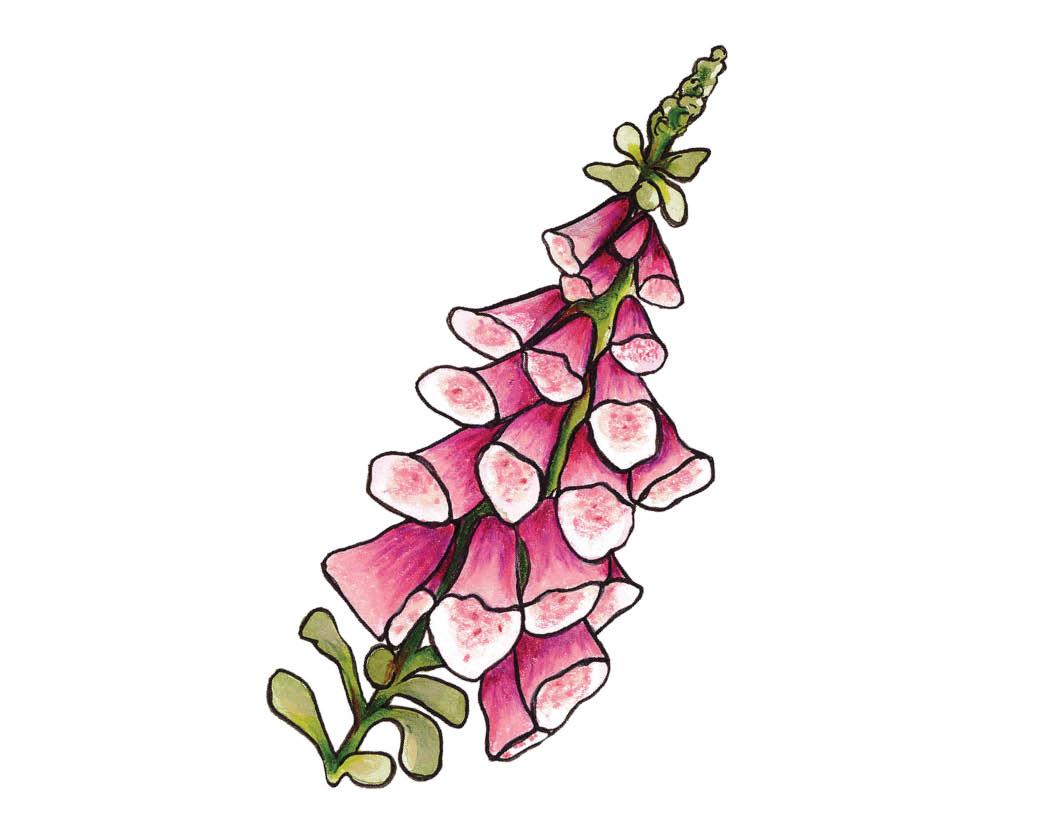
For 2024, our calendar features watercolour illustrations of UK wildlife by Alexia Claire. To go alongside this, we'd like to tell you more about the plants and animals we chose to feature each month. For November 2024, our species of the month is Foxglove (Digitalis purpurea).
How to identify foxgloves
Foxgloves are tall, common biennial plant often found in woodlands, hedgerows, and gardens. It typically grows between 60 cm and 1.5 meters tall, with a striking appearance that makes it easy to recognise. In its first year, the plant forms a rosette of large, oblong leaves close to the ground. These leaves are hairy, toothed at the edges, and a muted green, with paler undersides.
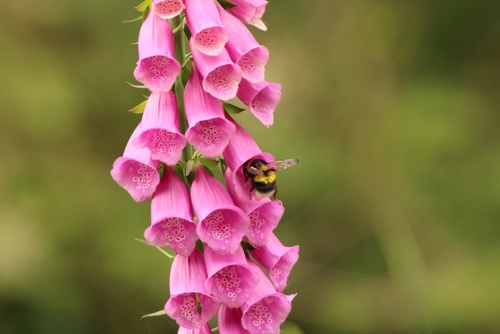
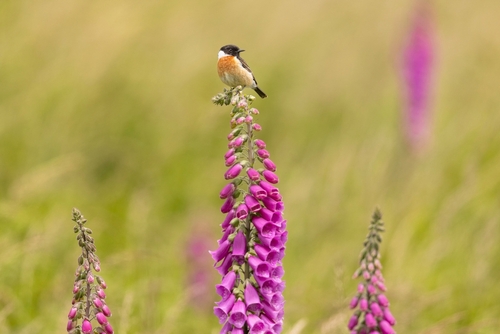
By the second year, foxglove sends up a tall, unbranched flowering spike. The flowers are very distinctive: tubular and bell-shaped, they hang downward in a row along one side of the spike. The blooms are usually a vibrant purple, marked with speckles inside, but variations can range from pink to white or even yellow. The plant blooms in late spring through early summer, adding height and colour to its surroundings.
Where are foxgloves found?
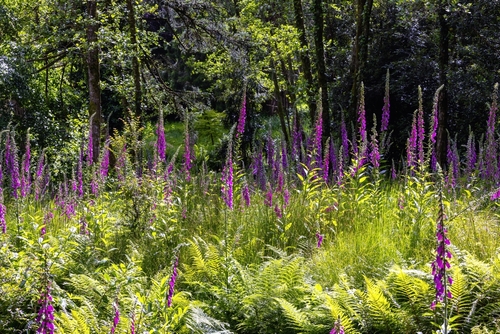
Foxgloves thrive in a range of habitats. They are commonly found along woodland edges and in clearings, where dappled light and well-drained soil provide the ideal environment for their growth. In heathlands, their tolerance for nutrient-poor, acidic soils allows them to flourish, often outcompeting less adaptable plants.
These plants are also quick to colonise areas of disturbed ground, such as those left bare after logging, fires, or human activity. Their seeds are light and easily carried by the wind, enabling them to germinate in open, exposed soil. Roadsides, railway embankments, and pathways are common sights for foxgloves, with a combination of sunlight and disturbed soil.
In upland and moorland areas, foxgloves are often seen on slopes and in open grasslands, especially in places where grazing animals avoid them due to their toxicity. They also grow on rocky slopes and coastal cliffs, where the sandy or gravelly soil is well-drained and supports their establishment.
Which species rely on foxgloves?
Foxgloves are an important resource for many species, particularly pollinators, that depend on their flowers for food. Bumblebees are among the primary beneficiaries, as the tubular shape, colouration and spotted lip of the foxglove’s blooms is perfectly adapted to their size and feeding behaviour. The bees crawl deep into the flowers to access the rich nectar, brushing against the pollen-coated anthers in the process. Other insects, such as certain species of solitary bees, moths and butterflies also visit foxglove flowers for nectar and pollen.
While foxgloves themselves are toxic if eaten directly due to cardiac glycosides, though they have been used in traditional and conventional medicines to treat heart failure. The toxicity ensures that they remain relatively undisturbed by grazing animals, allowing them to persist in ecosystems and continue supporting the species that rely on them.
How can we help protect them?
While foxgloves themselves are not directly threatened, we should encourage efforts to conserve and restore the habitats where they naturally grow, such as woodlands, heathlands, and moorlands. Since foxgloves thrive in areas of moderate disturbance, preserving these environments—by preventing overdevelopment, excessive agricultural practices, and deforestation—is crucial for maintaining the conditions they need. In places where foxgloves have disappeared, habitat restoration and rewilding efforts can help create the right conditions for their return. Reintroducing natural processes like controlled grazing or light woodland management can also benefit their growth and survival.
Educating the public about their importance for pollinators, like bumblebees, can help encourage responsible gardening practices. Foxgloves are often grown in gardens, but ensuring they are planted in suitable environments rather than being over-harvested from the wild—helps maintain healthy populations. Supporting local conservation initiatives and participating in wildlife-friendly gardening of native species can also contribute to the long-term protection of foxgloves and the invertebrates that depend on them.