



For 2024, our calendar features watercolour illustrations of UK wildlife by Alexia Claire. To go alongside this, we'd like to tell you more about the plants and animals we chose to feature each month. For our final species of the month in 2024, we have chosen the Rowan tree (Sorbus aucuparia).
How to identify rowan
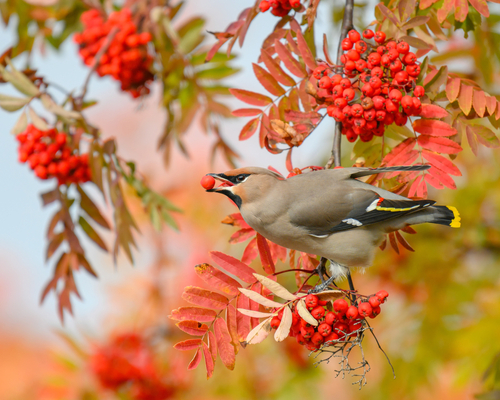
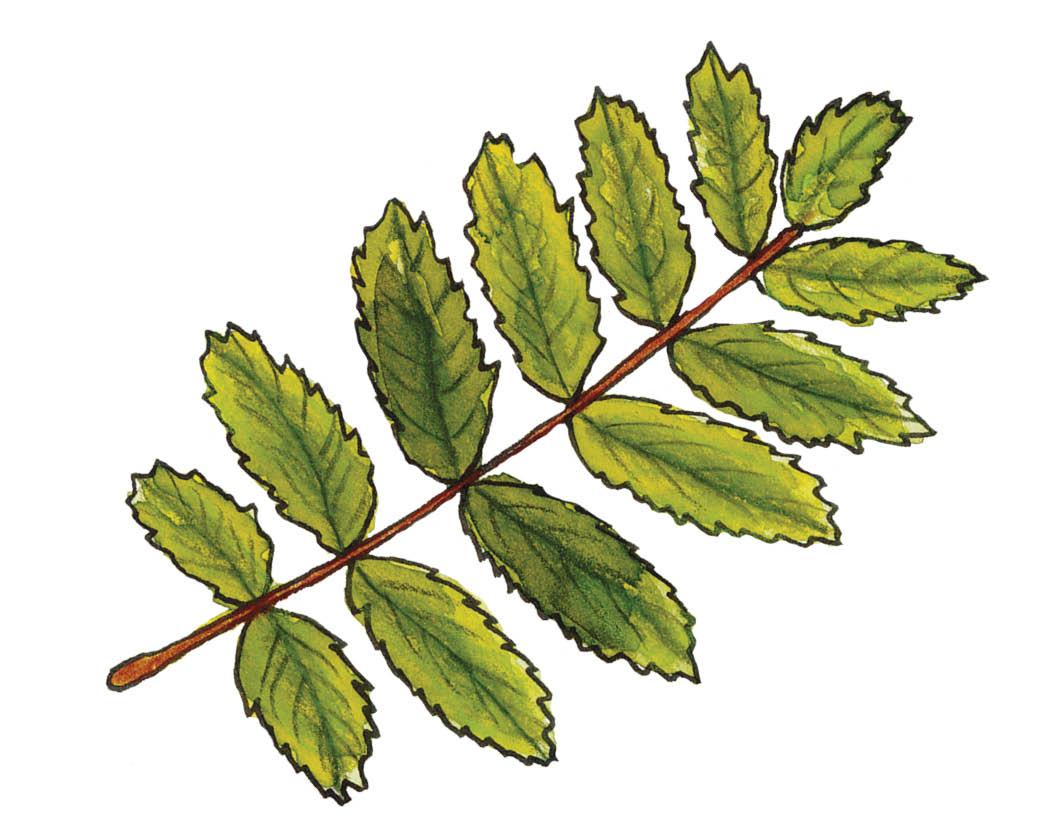
The rowan tree, or mountain ash, can be identified by several distinct features. Its leaves are compound and pinnate, with 11pi to 15 narrow leaflets arranged along a central stem. Each leaflet is serrated along the edges and tapers to a point. The tree produces clusters of small, scented, creamy-white flowers in late spring to early summer, which later develop into bright orange-red berries in autumn. These berries are a key identifying feature and are often seen in dense clusters.
Rowan bark is smooth and grayish when young, becoming rougher and slightly cracked with age. During winter, rowan buds are small, pointed, and dark purplish-brown, with a slightly hairy or downy texture. They grow alternately along the twigs, which are slender and smooth with a grayish-brown color. The terminal bud at the tip of each twig is larger and more prominent than the lateral buds. The tree itself is relatively slender and upright.
Where are rowan trees found?
Rowan trees are widely distributed across Europe, parts of Asia, and northern Africa. In the UK, they are common and thrive in a variety of environments. They are often found in woodlands, upland areas, and along hedgerows, where they can tolerate poorer soils. Rowan trees are also a popular choice for urban planting due to their hardiness and aesthetic appeal. Their ability to grow in rocky, mountainous regions and at higher altitudes gives them the name "mountain ash," although they are not related to true ash trees.
Which species rely on rowan trees?
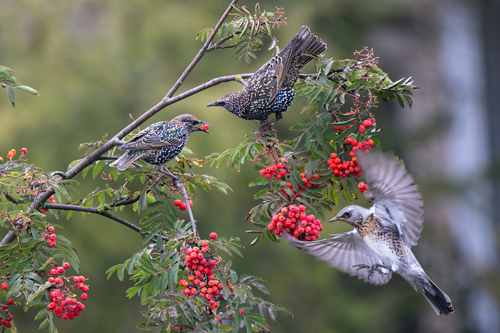
Rowan trees are a vital resource for many species, supporting a diverse range of wildlife. Birds, such as blackbirds, thrushes, waxwings, and redwings, heavily rely on rowan berries as a food source, especially during autumn and winter. These berries are rich in nutrients and attract migratory species. Small mammals, including dormice and pine martens, also eat the berries when available.
The tree supports various invertebrates, including moth larvae that feed on its leaves. For example, species like the autumnal moth and the scarce umber moth depend on rowan foliage during their caterpillar stages. In spring, the creamy-white flowers provide nectar and pollen for bees, hoverflies, and other pollinating insects.
How can we help protect them?
Supporting their conservation starts with planting more rowans, particularly in areas where they are native or historically present. Using seeds or saplings from local sources helps maintain genetic diversity and ensures the trees are adapted to the local environment.
Protecting existing rowan trees from overgrazing by deer or livestock is crucial, especially in upland areas where natural regeneration is limited. Fencing young trees or using tree guards can help them establish without being damaged. Managing invasive species that might outcompete rowans or alter their habitats is also important.
Promoting awareness of the ecological value of rowan trees encourages landowners and communities to incorporate them into rewilding projects and landscape restoration efforts, such as The Heart of England Forest and the Woodland Trust's tree planting initiatives. Supporting broader conservation initiatives that protect upland habitats and biodiversity will indirectly benefit rowans and the species that depend on them. Finally, avoiding harmful chemical use near rowan trees helps maintain the balance of insects, fungi, and microorganisms that interact with them.